What Cancer Taught Me About Nourishing My Body
by Bobbi Ewing
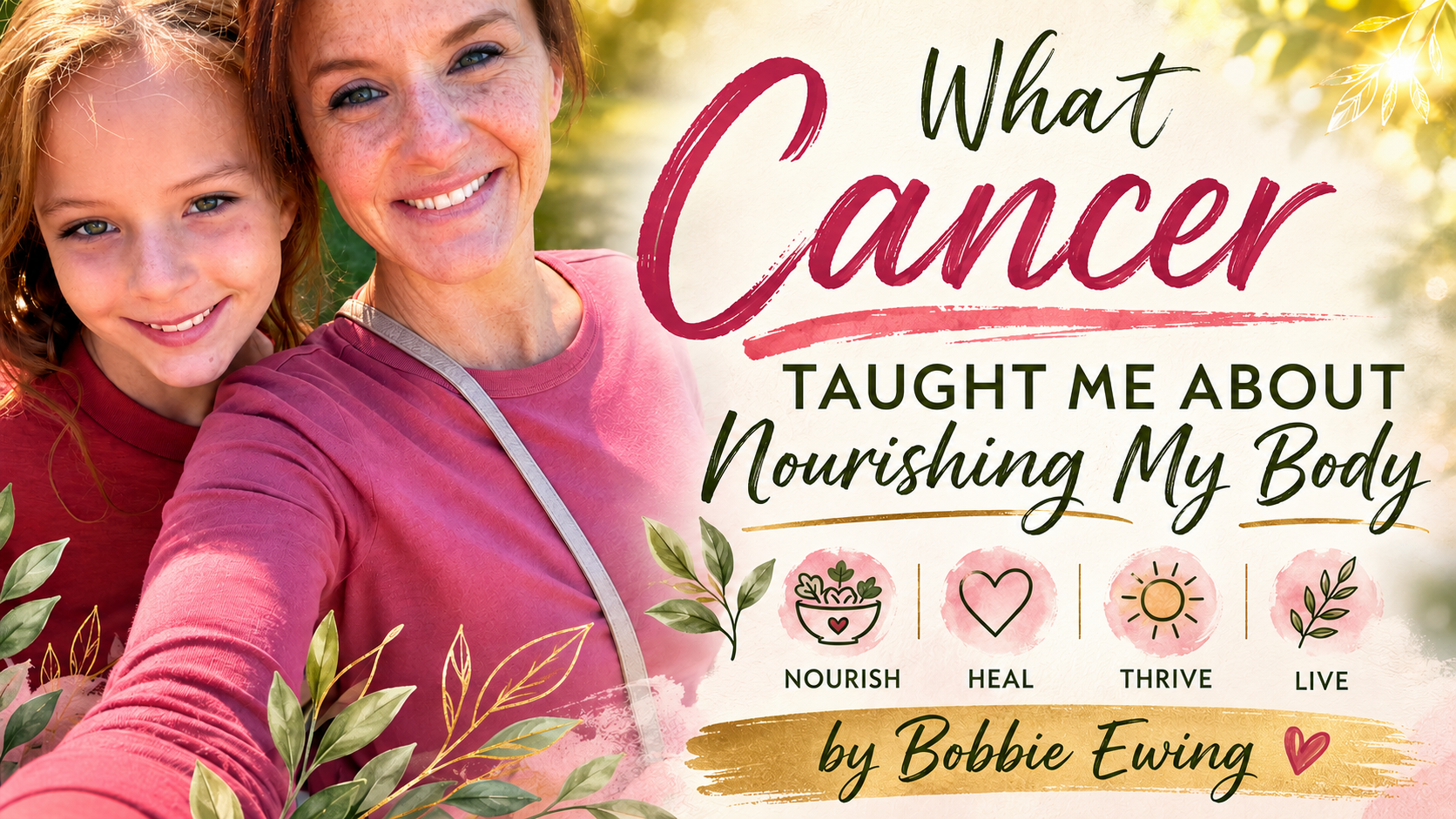
“Food wasn’t part of my cancer treatment, but it became part of my healing.”

What Cancer Taught Me About Nourishing My Body
by Bobbi Ewing
“Food wasn’t part of my cancer treatment, but it became part of my healing.”
What Cancer Taught Me About Nourishing My Body
by Bobbi Ewing
“”Food wasn’t part of my cancer treatment, but it became part of my healing.””
In 2019, a CT scan revealed a small lung nodule that was initially considered low risk. Despite reassurance, I trusted my instincts and independently sought out a pulmonologist against the recommendation of my primary care physician. That decision changed everything.
Over the following months, follow-up scans showed rapid progression. By December 2020, I had dozens of nodules and cysts in both lungs. What was expected to be a simple biopsy became open-lung surgery in March 2021. On April 2, 2021, I was diagnosed with Stage IV B-cell Non-Hodgkin’s Lymphoma involving lymph nodes above and below the diaphragm, as well as multiple organs.
During staging, a thyroid nodule was also discovered and later confirmed as Papillary Thyroid Cancer.
Treatment focused first on the lymphoma. For six months, I underwent chemotherapy and immunotherapy every 28 days for two days each cycle while trying to stay present for my six-year-old daughter, Grace, and maintain my professional career as a Human Resources Leave and Benefits Administrator.
My final chemotherapy treatment was on October 24, 2021. In December, I had the right side of my thyroid removed and was told I was cancer-free, a moment filled with overwhelming relief and emotion.
What I didn’t anticipate was how difficult life would feel after treatment ended. When the fight stops, the emotional weight settles in, and you’re left to process everything you survived.
What Sparked My Interest in a Whole-Food Approach
Throughout my entire cancer journey, including surgeries, chemotherapy, immunotherapy, and endless medications, not one provider offered meaningful guidance on how to nourish my body. Where food was concerned, I was told to “eat whatever I could.” If that meant ice cream, junk food, or other highly processed foods, so be it.
As a lifelong dieter, that felt freeing in a sense, like a ticket to enjoy food with reckless abandon. To be clear, that is not exactly what I was told, but it is what I heard. I pushed back on the conversation about dietary restrictions during one of my initial oncology consultations and asked for nutritional support, but that support never came.
I may have been a lifelong dieter who should have known how to make better food choices, but I had been given what felt like food freedom for the first time in my life, and I desperately wanted a break somewhere. Deep down, I knew processed foods and sugar were not supporting healing. Yet no one seemed to believe that food could hinder healing either.
In 2024, when my lymphoma recurred and I began daily chemotherapy at home, my health declined rapidly. I felt constantly inflamed, gained more than 30 pounds, struggled with pain, fatigue, vomiting, frequent infections, and barely recognized myself.
My daughter was eight at the time, and I felt like I was failing her. I was always too sick to play outside or go anywhere, really. That realization broke me, but it also motivated me.
I knew I didn’t need another diet. I needed something real, healing, and sustainable.
After researching countless programs, I found Tieva and her whole-food approach to healing. Following my gut, I finally stopped hovering over the “Schedule a Free Consultation” link.
I was nervous, skeptical, and desperate.
From my first conversation with Tieva, I felt something I had never felt before: belief. She didn’t see me as broken or defeated. She saw what was possible.
For the first time, I wasn’t chasing weight loss. I was chasing energy, health, and a version of myself I wanted my daughter to see. Tieva showed me that food could be a tool for healing, not punishment.
I committed to her nutrition education for myself and for my daughter. I would give it everything I had.
The Most Surprising Changes
I was terrified I would fail the program, or that the program would fail me, especially after creatively financing a way to find money I didn’t have in order to join.
But within five days, I felt inflammation leaving my body. Within two weeks, the changes were undeniable.
I went from waking up four to seven times a night to use the bathroom to sleeping through the night, despite drinking the same amount of water. My bladder hadn’t been “overactive”; it had been inflamed.
My sleep improved. My mood improved. My pain decreased. My energy began returning.
The biggest surprise wasn’t the weight loss, although that came during the 90-day program as well. It was realizing that the foods I used for comfort and convenience were actively harming me.
Food, when chosen intentionally, became part of my healing.
What Other Cancer Patients Should Know
You must be your own advocate.
The medical system focuses on treatment and survival but rarely on nourishment. Food matters. It affects inflammation, energy, mood, recovery, and your ability to show up for the people you love.
Everything we eat is a choice we make, and it’s not “just food.” It is energy gained or lost. Time with loved ones protected or stolen.
Choosing food that fuels your body for the fight is not the quickest or most convenient choice. But if you want energy and a body that can fight for your life alongside you, it is one of the most powerful choices you have.
People will love and support you in the ways they know how. This often means bringing comfort foods or having fast food delivered so you can rest.
Don’t misunderstand me. It is an incredible thing to experience people, including those you may have never met, rallying around you to help in your fight.
The question I wish I had asked sooner was this:
“Is this helping me heal, or is it making the fight harder?“
Tieva taught me lessons I will carry forever. In my experience, these lessons will not come from an oncologist, surgeon, or even your closest family and friends.
The moment you feel your lowest or sickest, when you cannot fathom finding the energy to prepare the foods your body needs, that is the moment you need to remember why you are here and why you deserve to make yourself and your health a priority.
If you succumb to the sickness, the fatigue, the feeling of defeat, and fail to focus on the fuel you are putting into your engine, your engine will fail.
Although processed, sugary, chemically manufactured foods may seem like the easiest and most comforting option during your darkest moments, they keep you stuck in the cycle.
Choose whole foods. Take the time to prepare your fuel. With consistent nourishment, you can rise from that low point, regain your energy, and find the strength to break the cycle.
A Note from Sanara Wellness
Bobbi’s story is one of the reasons we felt called to create nutrition programs specifically designed to support individuals navigating cancer and recovery. Like many survivors, she discovered that while treatment focused on fighting the disease, there was often little guidance on how to nourish and support the body throughout the journey.
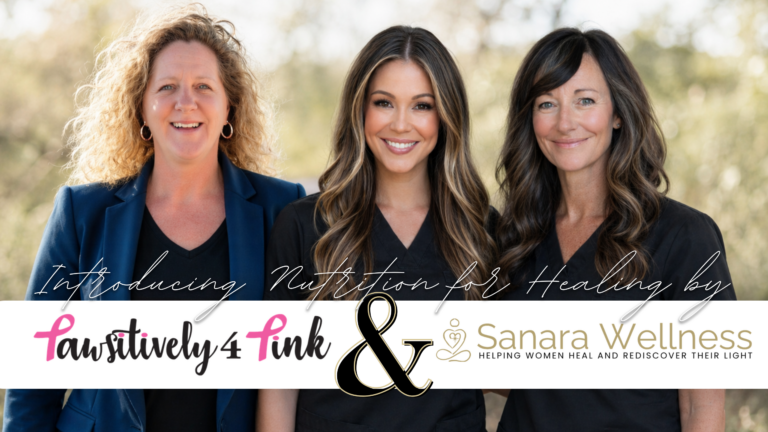
Today, that passion has grown into a collaborative partnership with Pawsitively 4 Pink (P4P), helping make nutrition education, supportive coaching, and whole-person wellness support more accessible to women facing breast cancer.
Through P4P, women diagnosed with breast cancer may apply for financial assistance to help ease the financial burdens that often accompany a cancer diagnosis, including household expenses, groceries, and other everyday needs. Eligible participants may also qualify for a fully sponsored spot in our Nutrition for Healing Program.
Together, our goal is simple: to ensure that no woman has to navigate her healing journey without education, support, compassion, and hope.
Ready to feel better?
Take the first step and schedule your complimentary consultation.